Protect Your Garden from Snow Damage!
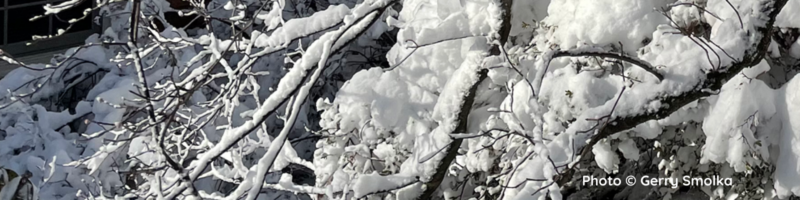
Get ready for the BIG SNOW! Here are some useful links to protect your garden from snow damage.

Master Gardeners of Northern Virginia
Over 40 Years of Growing Gardens and Gardeners

Get ready for the BIG SNOW! Here are some useful links to protect your garden from snow damage.
#mgnv #mastergardener #saltdamage
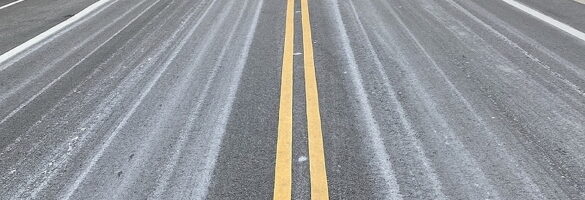
Discover how salt from de-icing can harm garden plants and explore treatments and salt-tolerant alternatives for a healthy garden.
Master Gardeners of Northern Virginia (MGNV) turns 40 this year! Over the hill? No chance! We are between the rows, behind our trowels, beside our plants, and before the public, fulfilling our mission to promote sustainable gardening.
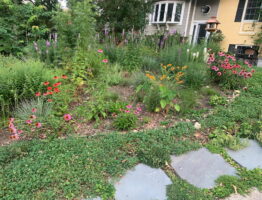
What will you do differently in the garden this year? We asked Master Gardeners of Northern Virginia to share their gardening resolutions, and their responses range from personal care to gardening more intentionally to help the planet. So, if you’re up for something new, pick one or two from our list of 25 gardening resolutions for 2025.
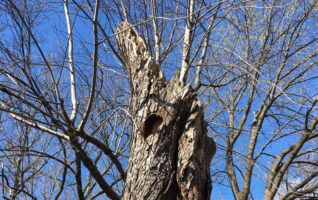
Trees work hard providing food and habitat for wildlife and hosting services for butterflies and moths. Trees keep on working as they die and decay. Dead tree trunks left standing (snags), downed logs, fallen branches, and stumps continue to provide food and habitat, sometimes for years.
Originally published in 2022
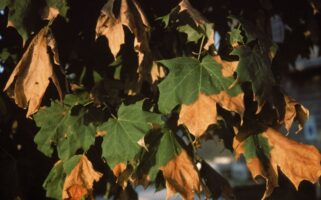
Learn about the signs of drought stress in trees and plants, how to assess their chances of recovery, and what steps can be taken to aid in their revival.
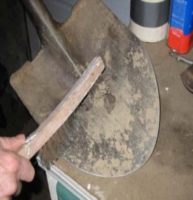
Gardeners usually think of winter as a time for taking stock of the year’s successes and failures and then planning for the upcoming growing season. One important task they should consider before designing new beds or perusing seed catalogs is preparing their gardening tools for off-season storage. Tools that are well cared for will last longer, take less effort to use, cause less damage to plants, and help to prevent the spread of diseases.
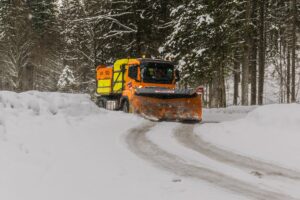
How do we manage our landscapes for both human safety and concern for the environmental impact of products like ice melt and deicers on the environment?
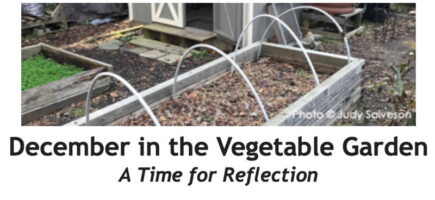
Vegetable gardening information and events for December 2022
As the days grow cooler and shorter and flowers fade, there are still tasks for the home gardener. Whether you grow plants in containers on a patio, in window boxes, or a small, urban garden space, you’ll want to take protective measures for your herbaceous (perennials or annuals) or woody (evergreen or deciduous) plants.
The Organic Vegetable Garden uses cover crops as transition plantings to improve soil texture, water infiltration, and fertility in the garden. Planting of cover crops begins in September at the OVG.
Controlling pests in our gardens can be frustrating whether they be blatantly furry and adorable or seemingly impossible to find as you search the ruins of a plant. Pests can even be invasive plants that bully the non-invasive vegetation. If you are experiencing pest problems in your garden or yard, the following classes and resources will help you.
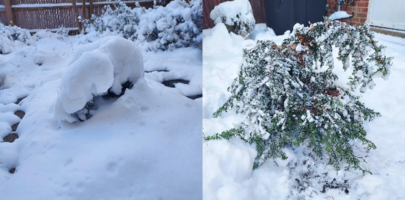
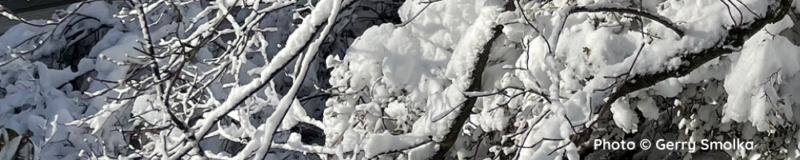
Though snowfall can transform our landscape in ways beautiful and wondrous, heavy snowfall can also cause astounding harm. Trees and shrubs broken under the weight of snow and ice need to have damaged wood carefully removed.
As the days grow cooler and shorter and flowers fade, there are still tasks for the home gardener. Whether you grow plants in containers on a patio, in window boxes, or a small, urban garden space, you’ll want to take protective measures for your herbaceous (perennials or annuals) or woody (evergreen or deciduous) plants.
Mosquitoes are a perennial summer pest, and the temptation to resort to commercial spraying to deal with this scourge can be strong. A key consideration to keep in mind is that all insecticides used to target adult mosquitoes are nonselective and will kill all insects that come in contact with the chemicals, including pollinators and other beneficial insects. Learn better techniques for controlling mosquitoes.
Worried about cicada damage? Learn more about coping with "flagging" and the right way to prune post cicada damage.
Protect yourself from ticks without destroying beneficial insects. Spraying pesticides to control ticks is ineffective because ticks reside primarily within leaf litter where the sprays cannot reach them, or they are brought in by animal hosts. The pesticides, however, are nonselective and will kill pollinators and other beneficial insects they come in contact with. There are much more effective ways to protect yourself, your family, and your pets and still enjoy the outdoors.
We are already seeing calls for spraying to control mosquitoes on neighborhood social media sites. Before you think of spraying, check out these better options for controlling mosquitoes that will not hurt beneficial insects.
Considering purchasing a live Christmas tree with the intention of replanting it outdoors when Christmas is over? Read on to learn more about helping your tree survive its time indoors.
Young or newly planted trees that have not spread their feeder roots into the surrounding soils will require more attention and regular irrigation because of limited abilities in obtaining water in their growing environment. All newly planted trees should have 1 inches of water per week- even in the winter- for two years.
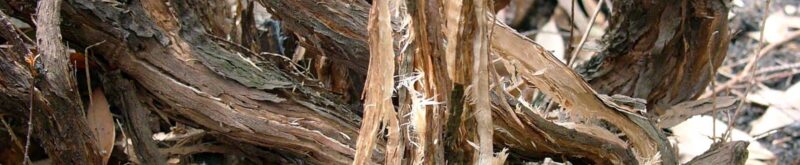
If you grow ornamental shrubs (especially those that are marginal in winter hardiness like rosemary, lavender cotton, heaths, evergreen azaleas, etc.), then you may have observed bark splitting.