Word Quiz of the Week
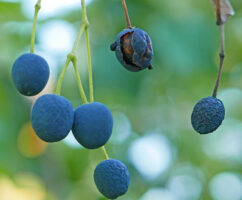
Often, and erroneously, referred to as berries, what type of fruit do holly, fringetree, and partridge-berry have?
Master Gardeners of Northern Virginia
Over 40 Years of Growing Gardens and Gardeners

Often, and erroneously, referred to as berries, what type of fruit do holly, fringetree, and partridge-berry have?
Tried and True Native Plant Selections for the Mid-Atlantic
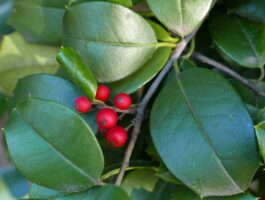
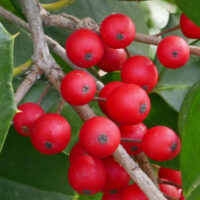
Commercial demand for American Holly, the State Tree of Delaware, for use in holiday decorations may have declined over the decades, but its value in the landscape has not. As temperatures drop, its evergreen leaves and red, berry-like fruits brighten the winter scenery.
Tried and True Native Plant Selections for the Mid-Atlantic
In the 1930s Delaware surpassed all states in producing decorations made of American Holly, which flourished in its countryside and became its State Tree in 1939. Still common in the Coastal Plain and southeastern Pennsylvania, its frequency lessens moving through the Piedmont into the mountains of Maryland and Virginia. Today commercial demand for holly has declined, but its value in the landscape has not. It comes into its glory as temperatures drop and berry-like fruits ripen to brighten the winter scenery.
When we speak of our gardens sustaining local wildlife, we’re often thinking of the nectar and pollen that insects and hummingbirds collect from our flowering plants . . . Woody plants provide shelter and nesting spots for animals in our home landscapes with their evergreen foliage, holes and hollows, thorns and thickets.
A number of plants native to our region provide continuing value and interest in our gardens into the winter. Their evergreen foliage or interesting bark add beauty to the landscape, while their berries, seeds, or stems provide support to wildlife through the cold months.