

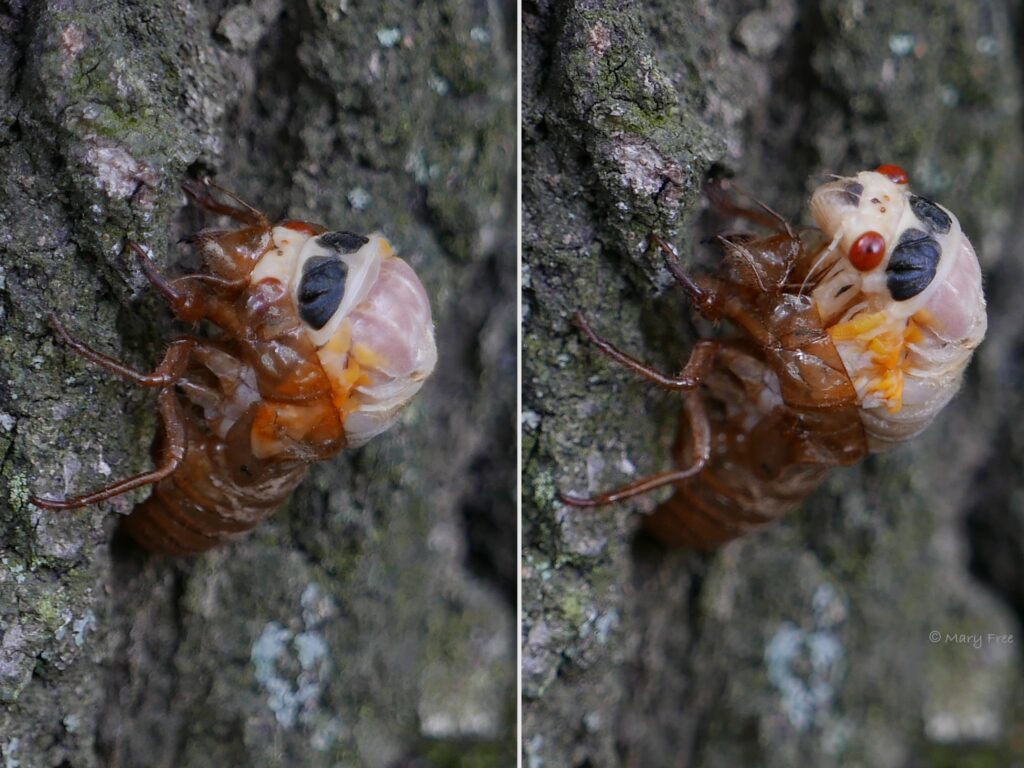
Photo © Mary Free
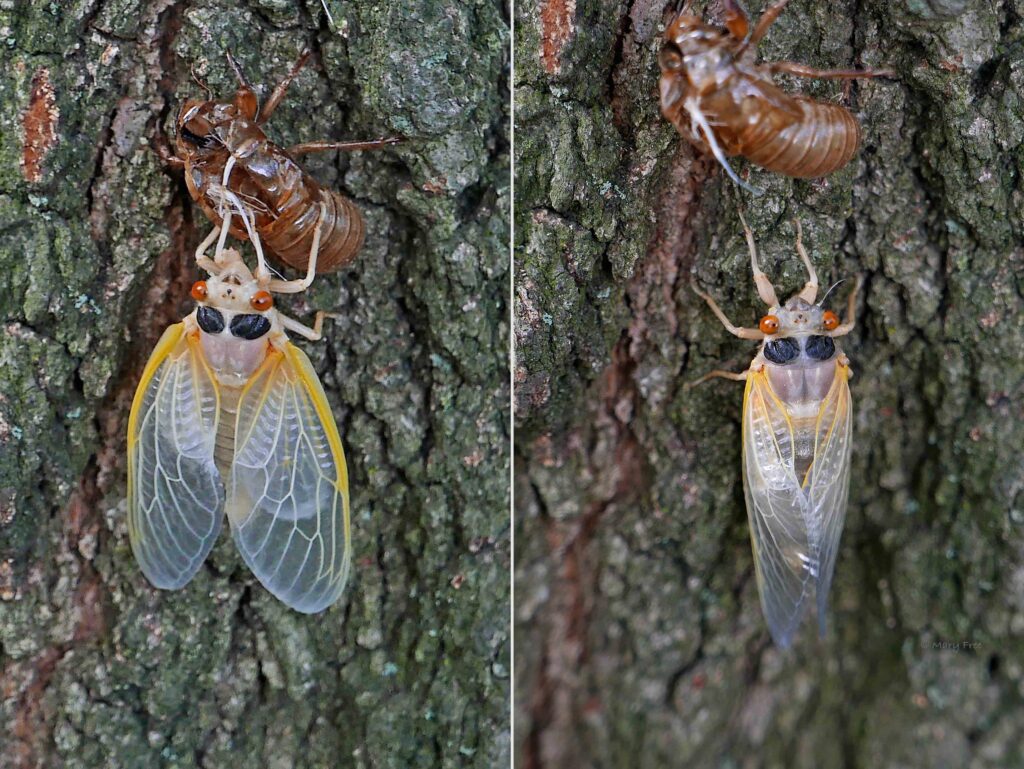
By 8:12 a.m. the cicada’s body was light gray and wings were
fully expanded. Soon after, it began its climb up the trunk
of a large oak tree. Photo © Mary Free
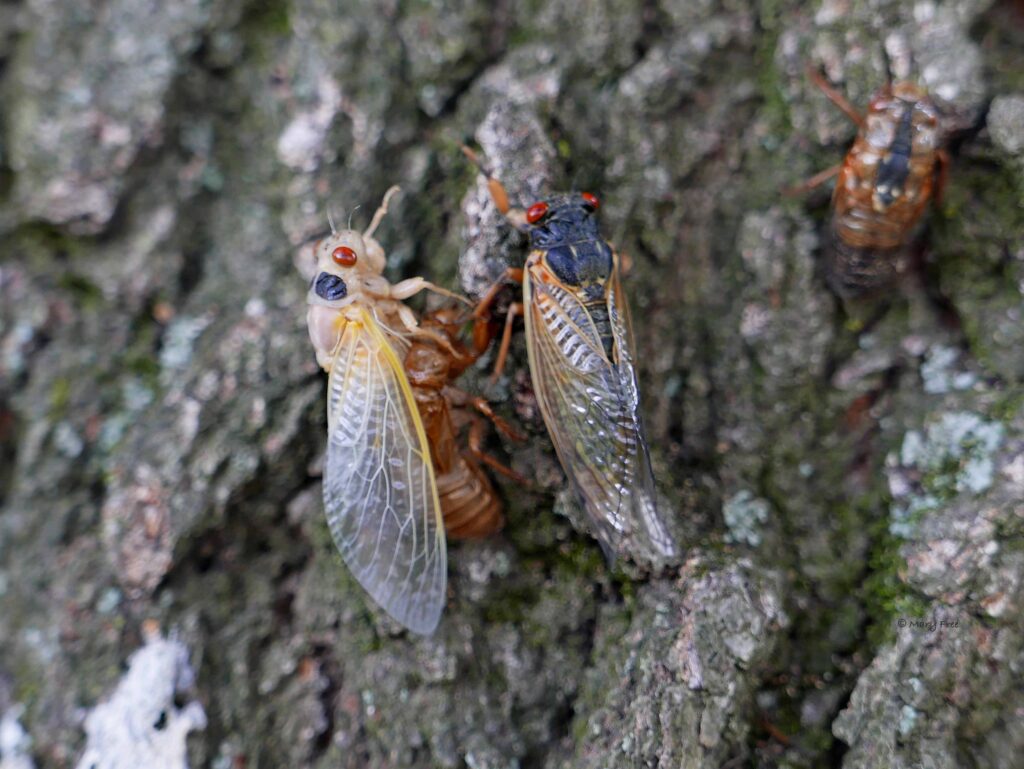
passing one struggling to molt. The latter was unsuccessful as
it had damaged its soft left wing and could not free it. Its body
hardened, trapped inside the exoskeleton. Photo © Mary Free
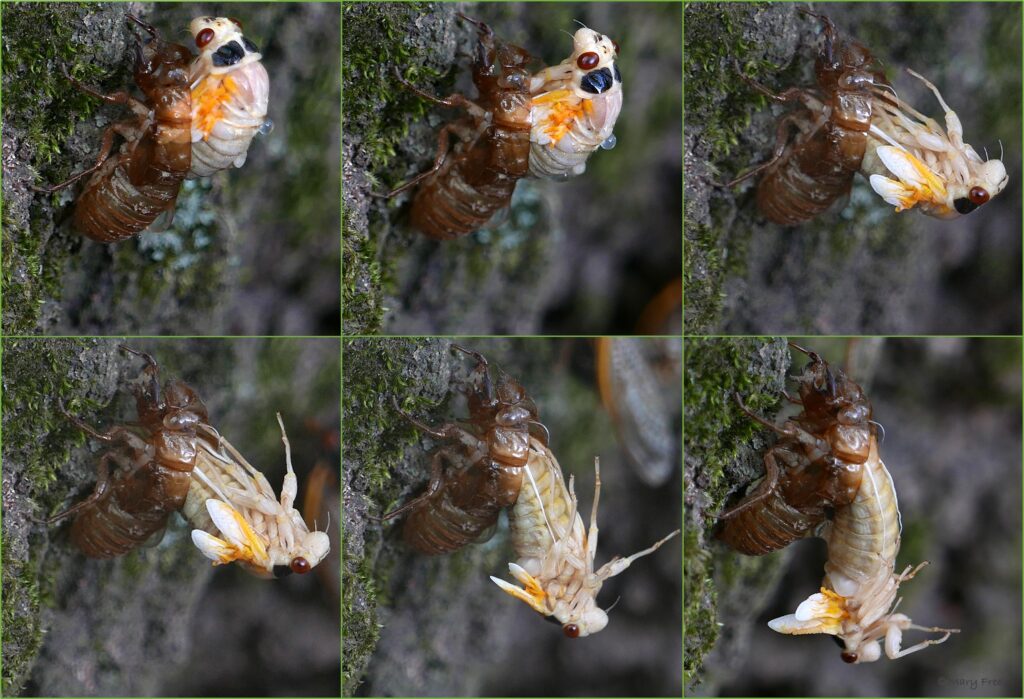
finally frees itself around 7:52 a.m., but instead of grabbing its
exoskeleton to pull itself out, it dropped a couple of feet to the ground below.
Photo © Mary Free
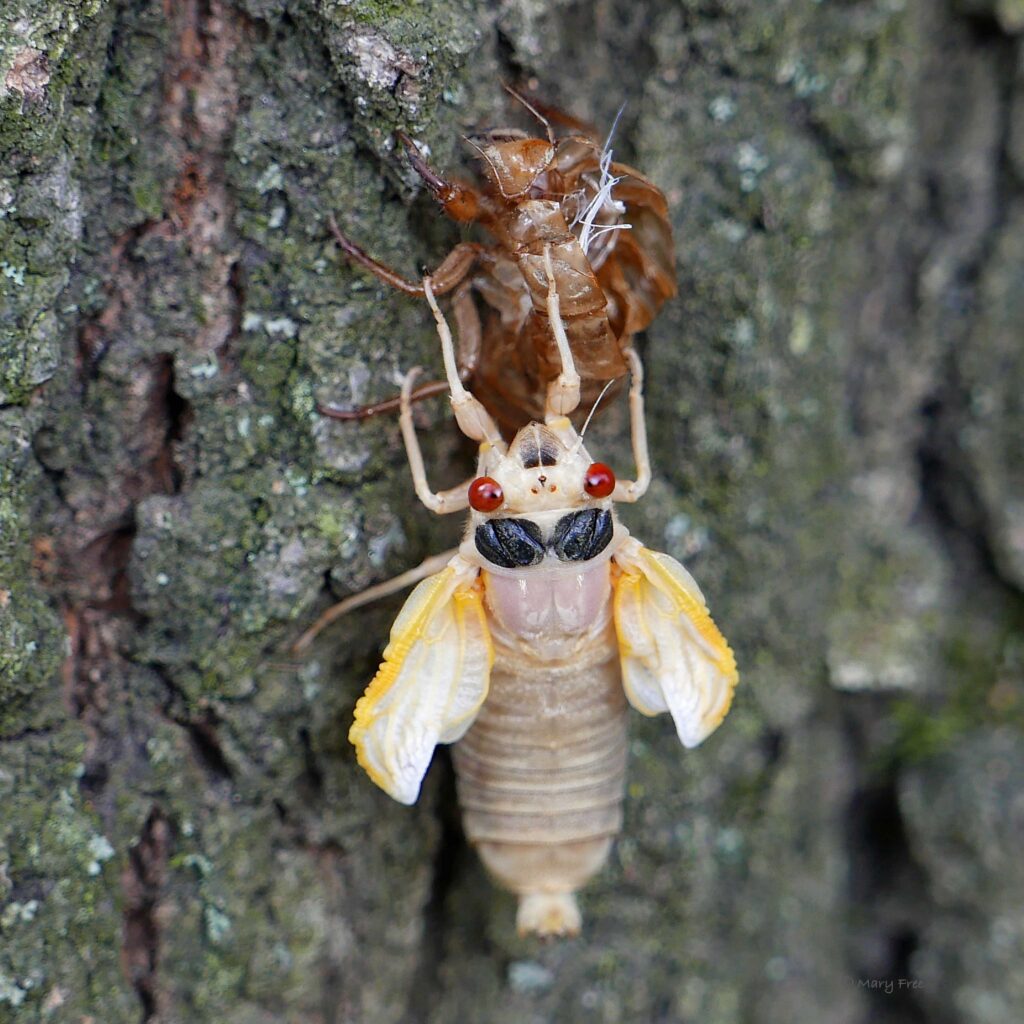
Its wings will eventually expand and
its body will turn black as it hardens.
Photo © Mary Free
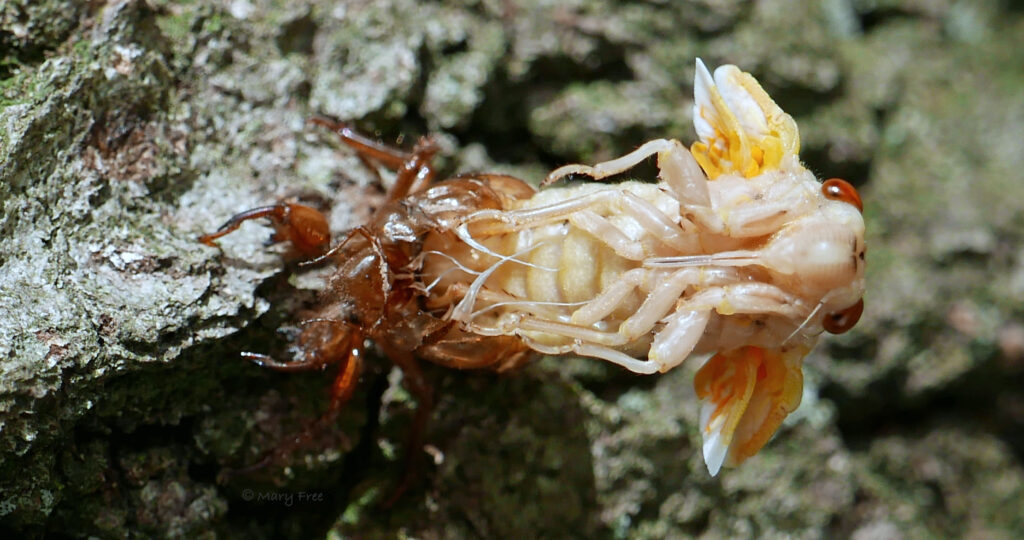
Photo © Mary Free
For some cicadas, the molting process can be long and arduous, taking up to an hour or more. After the nymph emerges from the ground and chooses a spot (usually one that is vertical, on a plant leaf or stem or tree trunk), a split in its exoskeleton forms between its eyes to the end of the thorax. It removes its head first and then vibrates the rest of its body out, until it is in an upside-down position. Its body is soft and wings are especially vulnerable during this time. The cicada can damage them as it struggles to free itself, or in a fall, if it fails to grab the exoskeleton and pull itself out, and drops down instead. Click on the images above for larger views and to read the captions to learn more. The cicadas were photographed on May 22, 2021 in Fairlington, Virginia.