Master Gardener Virtual Classroom Page

Visit our redesigned and more accessible Master Gardener Virtual Classroom page!
Master Gardeners of Northern Virginia
Over 40 Years of Growing Gardens and Gardeners

Visit our redesigned and more accessible Master Gardener Virtual Classroom page!
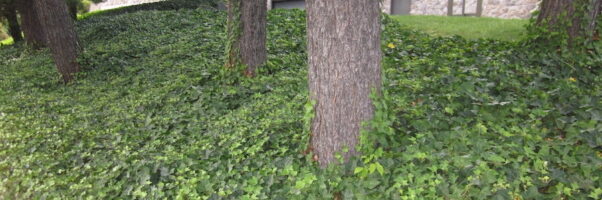
Our eyes are used to ivy and many homeowners cite its hardy evergreen nature as essential. The good news is that there are excellent native choices to replace it.
Tried and True Native Plant Selections for the Mid-Atlantic
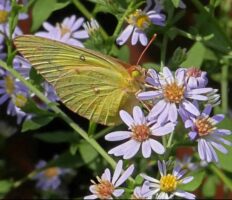
Formerly classified as Aster cordifolius, this native, found along forest edges and ledges in the eastern half of North America, would be a welcome addition in a residential shade garden. When summer flowers are fading through mid fall, the delicate blue flowers of this prolific bloomer attract numerous pollinators.
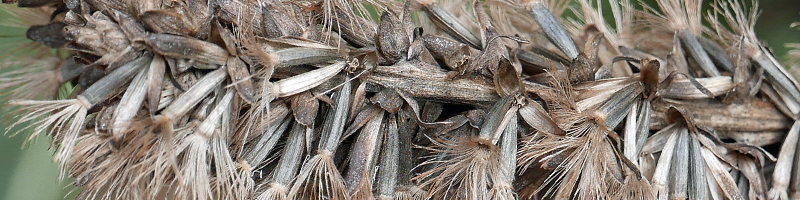
Featured Glossary word: Cypsela
cypsela: a one-seeded, indehiscent, dry fruit formed from an inferior ovary and with a fused calyx, characteristic of the Asteraceae
Unlike the internationally recognized terms of taxonomy (the orderly classification of plants), no agreed upon standards exist for naming fruits. Almost 100 types of fruit have been described since 1751 when Carl Linnaeus identified eight different fruits in his Philosophia Botanica.
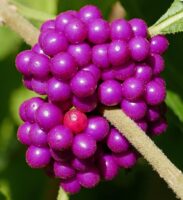
The Glencarlyn Library Community Garden coordinators have recently created a new series of short videos highlighting the beauty of native plants. We will be sharing these videos on our website every month as well as glossary words that go along with each month's topic. This month's focus is on native shrubs that bear outstanding fruit.
Tried and True Native Plant Selections for the Mid-Atlantic
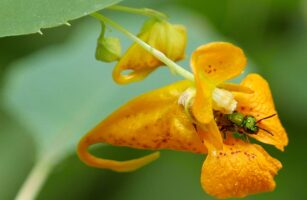
The showy flowers of this native annual dangle on slender stalks mid- summer to early fall along stream banks and in open swamps, moist meadows, and marshes throughout the Mid-Atlantic Region. Water droplets captured on its leaves glisten, giving rise to its common name, Jewelweed. The violent dispersal of seeds from ripe capsules, which burst open upon contact, give it another common name, Touch-me-not.
Featured Glossary word: Annual