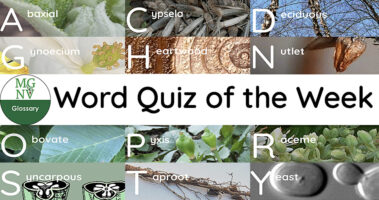
Word Quiz of the Week
#MasterGardener #MGNV #Glossary
What is the scientific study of the traditional knowledge and customs of different human societies concerning plants and their medical, religious, economic, and other use?

Master Gardeners of Northern Virginia
Over 40 Years of Growing Gardens and Gardeners

#MasterGardener #MGNV #Glossary
What is the scientific study of the traditional knowledge and customs of different human societies concerning plants and their medical, religious, economic, and other use?
#MasterGardener #MGNV #Glossary
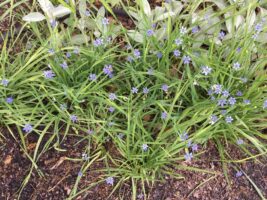
What adjective describes a plant that grows in dense tufts?
#MasterGardener #MGNV #Glossary
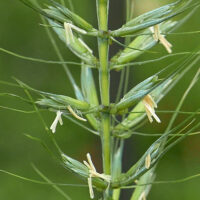
What is a small or secondary spike called?
#MasterGardener #MGNV #Glossary
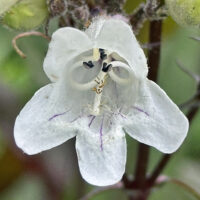
Chelone (turtlehead) and Penstemon (beard-tongue), both members of the Plantaginaceae (plantain family), are described as having five stamens—four fertile and one sterile. What is the sterile stamen called?
#MasterGardener #MGNV #Glossary
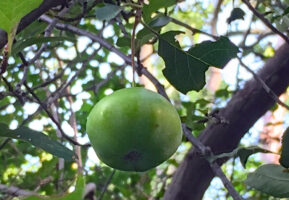
What type of fruit is an apple?
#MasterGardener #MGNV #Glossary
In casual conversation, you might hear this term used to describe a person who is easily cheated or deceived, but in botany, it describes a shoot originating underground from the root or stem of a plant; what is it?
#MasterGardener #MGNV #Glossary
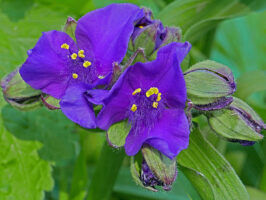
What are the dense tufts or rows of hairs found on some species of irises, spiderworts, and turtleheads?
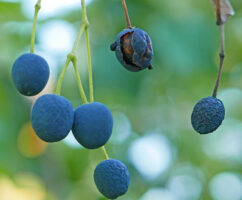
Often, and erroneously, referred to as berries, what type of fruit do holly, fringetree, and partridge-berry have?
#MasterGardener #MGNV #Glossary
Is the first flower to bloom on a cyme at the top or the bottom of the main axis?
#MasterGardener #MGNV #Glossary
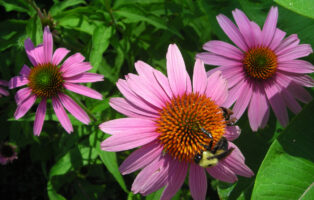
What type of inflorescence is a composite flower?
#MasterGardener #MGNV #Glossary
Dichogamy is a cross-pollination strategy where a flower’s stamens—male reproductive organs—and stigmas—female reproductive organs—mature at different times to prevent self-pollination. In protogyny, flowers are functionally female first and male second. What is the term for the process in reverse—when stamens mature before stigmas?
#MasterGardener #MGNV #Glossary
What are the underground stems from which roots and shoots grow?
#MasterGardener #MGNV #Glossary
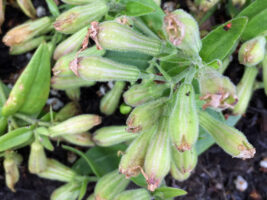
One of the common names of native ground cover Silene caroliniana is Sticky Catchfly; do you know why?
#MasterGardener #MGNV #Glossary
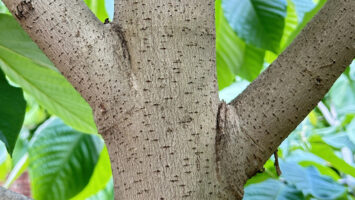
What are the spots, raised bumps, or stripy scarifications often visible on the stems of trees like pawpaw, birch, and cherry?
#MasterGardener #MGNV #Glossary
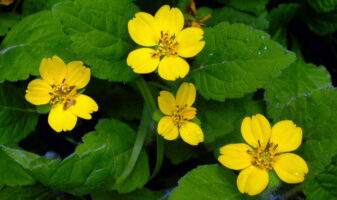
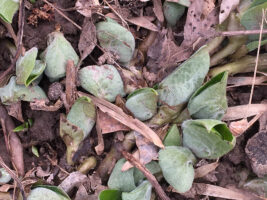
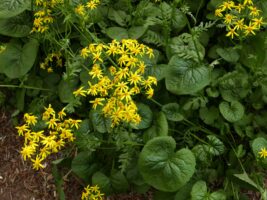
Packera aurea (golden ragwort) has two distinctive forms of pinnate leaves. Its basal evergreen leaves have pinnate venation. What is the term that describes its pinnately-lobed stem leaves?
#MasterGardener #MGNV #Glossary
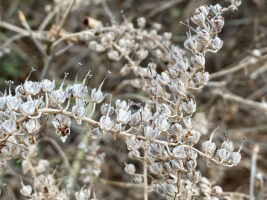
In botanical terms, what does the word persistent mean?
#MasterGardener #MGNV #Glossary
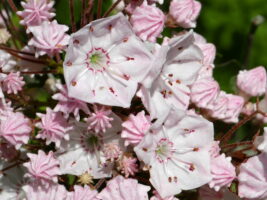
Kalmia latifolia (mountain laurel) flowers disperse their pollen using an explosive pollination method—vertical catapulting; which flower parts are involved in this process?
#MasterGardener #MGNV #Glossary
To what does this rhyme refer: “Sedges have edges, rushes are round, and grasses are hollow, straight to the ground”?
#MasterGardener #MGNV #Glossary
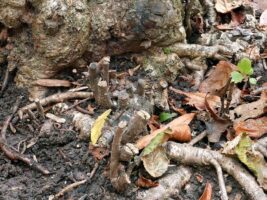
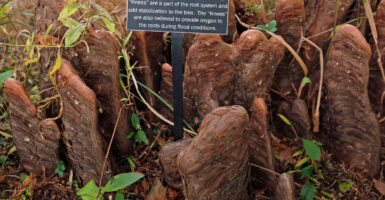
What tree, native primarily to the southeastern United States, has knobby knees?
#MasterGardener #MGNV #Glossary
How do vines, like Gelsemium, Lonicera, and Wisteria, climb?
#MasterGardener #Glossary
Over five years, #MGNV developed an illustrated horticultural and botanical glossary, defining 313 terms accompanied by about 1482 photos/illustrations/diagrams/videos. New glossary additions are paused for 2026 while we introduce "Word Quiz of the Week" to engage readers each Monday. Prepare yourself with today’s practice quiz. Happy New Year!
#MasterGardener #MGNV #Glossary
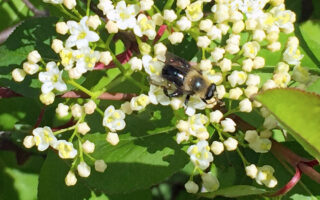
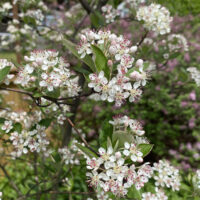
A #corymb is a flat-topped or convex inflorescence shaped by the varying heights of its flower stalks. Individual stalks grow upward from different levels on the rachis, with the outer stalks being longer than the inner stalks so that they all rise to approximately the same height.
#MasterGardener #MGNV #Glossary
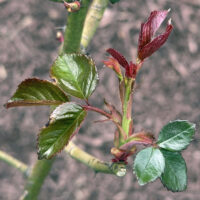
Stipules are modified leaves whose size and form vary among species. Typically much smaller than and distinct from primary leaves, they may be overlooked by casual observers. However, rose stipules are easy to identify—a pair fuses along the base of the petiole, creating a distinctive wing-like appearance.
#MasterGardener #MGNV #Glossary
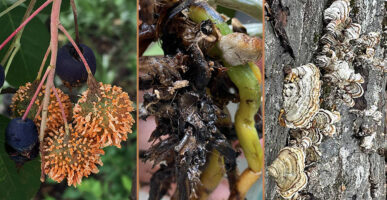
Fungi—rusts, smuts, mildews, molds, mushrooms, yeasts—can cause plant disease and death, or, can be beneficial as medicines and food and in symbiotic relationships. Mycorrhizal fungi partner with roots, stabilizing plants and enhancing their absorption of nutrients and water. To encourage mycorrhizal growth, #leave-the-leaves in fall.