Holiday Gift Shopping Guide
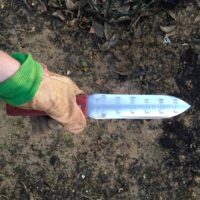
Our 2019 gift giving guide for your favorite gardener!

Master Gardeners of Northern Virginia
Over 40 Years of Growing Gardens and Gardeners

Our 2019 gift giving guide for your favorite gardener!
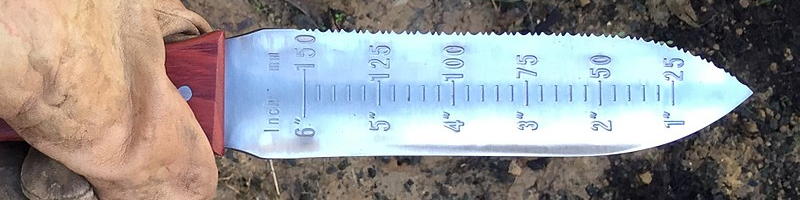
Gardening is easier and more fun when using the right tool for the job. EMGs shared some of their favorites in response to an informal survey.
Check out the lovely mint exhibit at the U.S. Botanic Garden!
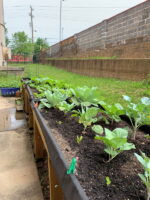
Master Gardeners of Northern Virginia (MGNV) is pairing with Arlington County’s Langston-Brown Community and Senior Center (LBCC), 2121 N. Culpeper St., Arlington, Virginia 22207 to assist seniors in planting and maintaining container gardens for vegetables, herbs, and flowers.
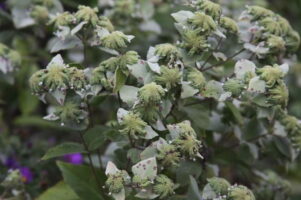
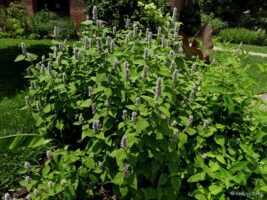
Mountain mints are members of the Lamiaceae family native to the Americas. Like others in the mint family, they have square stems and a distinctive smell when crushed or brushed against. They generally grow to 3 feet in clusters spreading by rhizomes.
We wrap up our celebration of patriotic color flowers with those that are shades and tints of blue. Some of the pictured flowers may tend more toward a lavender hue, because in nature blue flowers constitute “less than 10 percent of the 280,000 species of flowering plants” according to David Lee, an emeritus professor at Florida International University.
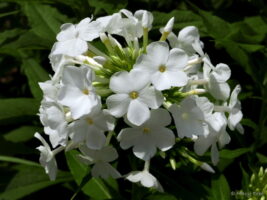
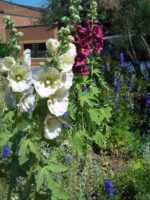
Today we remember Independence Day with the white flowers found in the Glencarlyn Library Community Garden and the Sunny and Memorial Rose Gardens in Bon Air Park on July 4, 2017 and 2018.
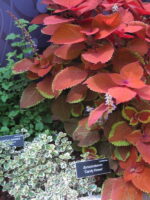
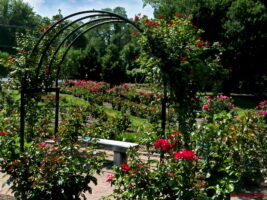
Pictures of some of the red flowers that we found blooming in local gardens on July 4 of years past.
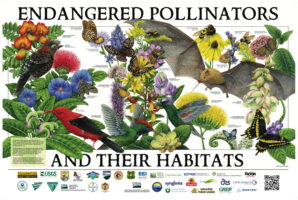
Learn about endangered pollinators from this beautiful graphic.
Extension Master Gardener Nancy Davis leads the restoration of the ravines where the Beth El "Chapel in the Woods" is located. The Chapel in the Woods project is an ongoing example of how cooperation among groups and individuals can make change in a community.
In 2008, I attended a lecture by Dr. Douglas Tallamy about how suburban gardeners can make a significant positive impact on our environment by using native plants. His talk was full of fascinating facts and examples. It spoke to my long-held concern for the problems facing the natural world , and gave me hope that I could actually make a difference just by how I gardened – something I loved doing.
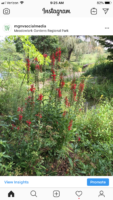
MGNV is on Social Media! - Have you seen our mystery plant posts on Facebook every Tuesday? This series, by Elaine Mills, Certified Extension Master Gardener, is now regularly posted in an expanded format on Instagram. Follow us at mgnvsocialmedia!
Homeowners with small yards or apartment dwellers with balconies may wonder what role they can play in supporting pollinators. The good news is that by selecting smaller sizes of woody plants and making creative use of containers, gardeners with limited space can enjoy appealing landscapes that attract a wide variety of these creatures.
A vigorous native tree may be host to many insects, which provide food for birds and omnivorous mammals. A stressed tree is most susceptible to pests, fungi, and disease. Trees have numerous ways to protect themselves; in fact bark is their first line of defense. However, trees sometimes need our help. Learn how to identify damage from borers to birds, invasive spotted lanternfly to spongy moth, and deer to voles as well as what to do about it.
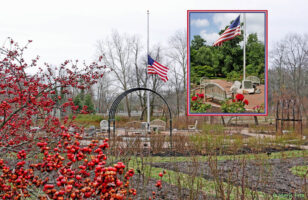
Find flowers that color the landscape red, white, and blue in the MGNV demonstration and other gardens on or around July 4 that you can plant to create your own patriotic garden.
Happy President's Day! In Part 1 of Planning for the Red, White and Blue, we introduce you to five Virginia Cooperative Extension (VCE) “Patriotic Gardens” publications to aid you in planting and planning for red, white, and blue color in all four seasons.
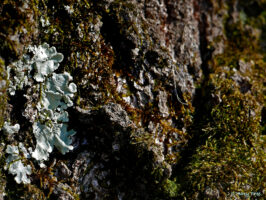
Part 3: Lichens and Mosses
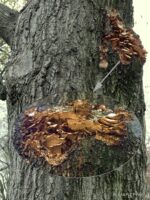
Crevasses in oak and other barks form important habitats and microhabitats for ferns, orchids, fungi, and epiphytes. Epiphytes include mosses, algae, and lichens that are integral to biodiversity in North American woodlands.
Part 2: Five Birch Trees of the Mid-Atlantic Region
Learn about five birch trees native to different areas of the mid-Atlantic region. Their uses in a cultivated landscape are varied. Those with the showiest bark shine year-round as specimen, shade, or lawn trees.
Part 1: Beautiful Bark
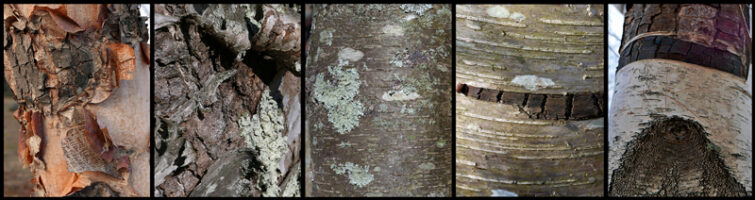
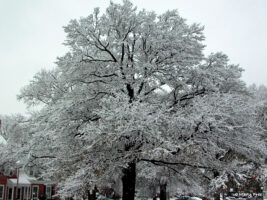
Where, beyond snow-covered landscapes, does one search in winter for wonders of the natural world? If one looks carefully at that which winter has laid bare, then the beauty of bark emerges. With no leaves to obscure the view, one can truly appreciate the varying colors, textures, and patterns of deciduous tree barks.
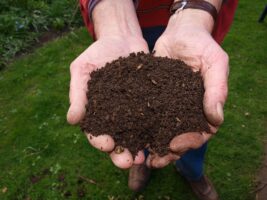
Gardens with rich, dense and diverse plantings—not bare land—attract and provide food for these organisms. They, in turn, move through the soil, aerating, enriching and making it more porous and absorbent. Whatever your “crop”—perennials, annuals, vegetables or fruits—you can join the growing movement of “soil gardeners” who care for their soil in order to grow better, more successful gardens.
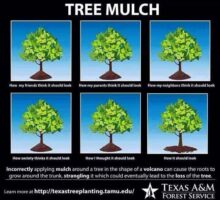
Thinking of planting more trees? It's not too early to plan for next year!
Both Alexandria and Arlington support the idea of maintaining and increasing the tree canopy of our highly urbanized area, and offer residents assistance through either free or reduced rate young tree. While fall is an ideal time to plant trees, our local governments offer trees sales or deliveries in spring as well. One such program in Arlington requires application by January 7, so we are offering information to help you plan.
As the cold of winter approaches, the Glencarlyn Library Community Garden winds down. Shorter days and colder temperatures signal some of the garden perennials that it is time drop leaves and turn brown, while for others it is their time to shine.
Learn more about the wonderful Norfolk Botanical Gardens. Part II of our series includes information on their themed mini-gardens, children's garden and statuary.
By Elaine Mills, Extension Master GardenerPhotos by Elaine Mills, Bob Kline & Alyssa Ford Morel Anyone planning a trip to coastal Virginia or the Carolinas may want to include a …