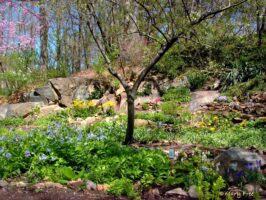
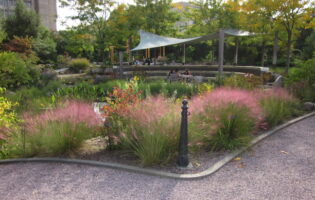
Continuing Tradition, Introducing Change: The Quarry Shade Garden
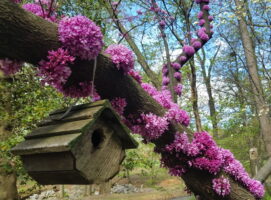
The new(ish) leadership of our Quarry Shade Demonstration Garden has reinvigorated the garden with more native plants.
Master Gardeners of Northern Virginia
Over 40 Years of Growing Gardens and Gardeners

The new(ish) leadership of our Quarry Shade Demonstration Garden has reinvigorated the garden with more native plants.
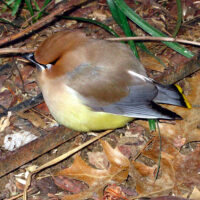
2018 is the Year of the Bird.
Migratory birds play a critical role in our ecosystems. They pollinate plants, disperse seeds, and eat insects, acting as a natural control of garden and agricultural pests and rodents. In order to protect migratory birds, the Migratory Bird Treaty Act (MBTA)1 was implemented 100 years ago today on July 3, 1918. It has been amended several times since its inception.
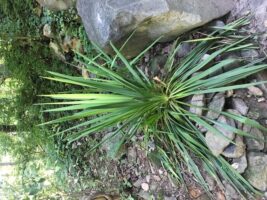
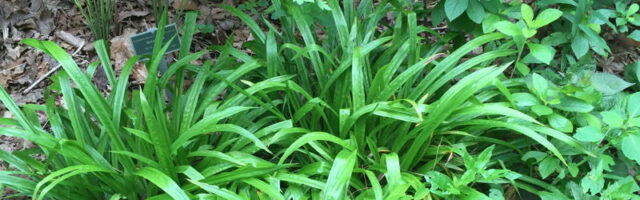
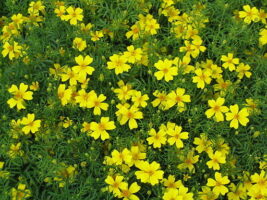
The Shade Garden at Bon Air Park in Arlington is one of the smallest of the demonstration gardens maintained by the Master Gardeners of Northern Virginia. Located off Wilson Boulevard at 850 N. Lexington St., the garden hosts nearly 100 different plant varieties, a few of which may be unfamiliar, if not unusual, to visitors. Learn about three of the unusual plants in the garden.
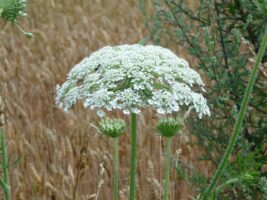
This article by Jennifer Gagnon from Va Tech describes how to deal with the dangerous invasive, Heracleum mantegazzianum (Giant Hogweed), recently discovered in Virginia.
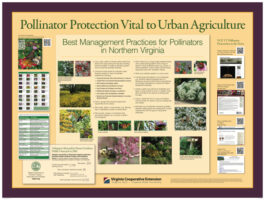
Besides showcasing a number of Virginia Tech resources, the Pollinator Protection Vital to Urban Agriculture poster, created for Pollinator Week 2017, lists eleven Best Management Practices for Pollinators in Northern Virginia.
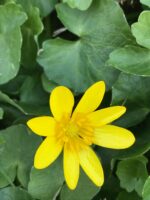
When spring finally arrived in the DC metro area, a rather showy groundcover had already made its presence known – lesser celandine or Ranunculus ficaria.
Despite its visual appeal, this groundcover is highly invasive.
In 1971, before Master Gardeners were even a gleam in anyone’s eye, Washington State University assigned two extension agents to the Seattle and Tacoma metro areas. Their job: to help the public with their urban and commercial horticulture questions. And did they get questions! The overworked agents put on radio and TV gardening shows, but that only drew more people to the Extension offices. The agents brainstormed how to handle the crowds. How about recruiting and training volunteers to help backyard gardeners?
Fact sheets for fifteen native ground covers are featured on the MGNV web site under “Tried and True Native Plant Selection for the Mid-Atlantic.” Here are some additional species that are native to our region and that are suitable for use in the home landscape.
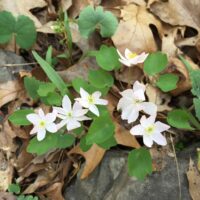
Learn about native spring ephemerals that bloom in April and May.
By Mary Free, Extension Master Gardener Originally posted April 2012 Continued from Ephemerals in the Shade Garden – Part 1, featuring bulbs, corms and trilliums. Although Bon Air Park’s Shade …
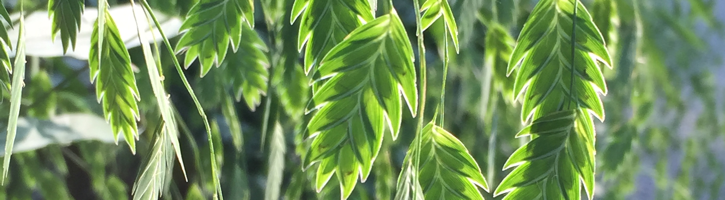
Grasses and sedges are both classified as monocots. These are plants whose seeds have one cotyledon (the part that will grow into embryonic leaves), and which possess flower parts in multiples of three, leaves with parallel veins, and scattered vascular bundles. While they resemble each other superficially, grasses are members of the Poaceae family and sedges belong to the Cyperaceae family.
As local plant sales and nurseries carry more straight species and cultivars of some Mid-Atlantic native grasses, commercial and residential landscapers are beginning to recognize both the ornamental characteristics and value to wildlife of these native plants.
When I plan a vegetable plot, I always include flowers. You might think that this would take needed space from the vegetables, but I argue that the flowers will pay you back handsomely. For one thing, they attract pollinators, such as bees, butterflies, and other beneficial insects during the growing period. Also, many flowers are edible, so one could argue that they earn their keep twice over. . . .
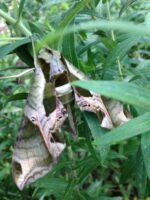
Here’s an example of a creature so well-camouflaged that its sighting is indeed a surprise. The Pandorus sphinx moth (Eumorpha pandorus) has coloration and behaviors that often keep its presence secret or disguised.
December is an ideal time to visit Longwood Gardens, the expansive botanical gardens located in Kennett Square, Pennsylvania, about 120 miles from Arlington.
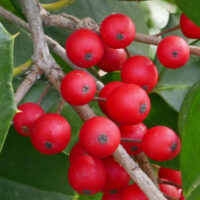
A number of plants native to our region provide continuing value and interest in our gardens into the winter. Their evergreen foliage or interesting bark add beauty to the landscape, while their berries, seeds, or stems provide support to wildlife through the cold months.
By Elaine Mills, Extension Master Gardener Last spring, while perusing the Winter 2017 issue of Sempervirens, the quarterly publication of the Virginia Native Plant Society, I came across a short …
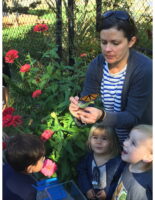
The Carlin Hall Preschool children gathered round their teacher, Carly Moser, to release the Monarch butterfly they had nurtured in their classroom through all its wondrous stages.
As summer’s annuals are beginning to fade and fall perennials are putting on their last show of bloom, native grasses take on a more prominent role in the natural landscape.
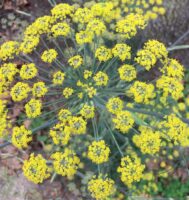
This is the first in an occasional series of short articles on herbal additions to food and drink. Each featured herb is grown in the Master Gardener Demonstration Garden at the Glencarlyn Branch Library in Arlington County, Virginia, and used to make food or drink to be served as “tastes” at our annual AutumnFest celebration in September.
By Jolene Mafnas, VCE Agricultural and Natural Resources Intern Our Horticultural Help Desk receives many queries each week. Thanks to Jolene Mafnas for pulling together some of the common questions …
The First Nations Development Institute, a Denver-based non-profit, conducted the tour, which focused on native agriculture, community gardening projects and food sovereignty–the right of people to healthy, culturally appropriate, sustainably produced food. Across Indian Country, and with the support of groups like First Nations, a revival of agriculture and community gardening is taking place.
By Jolene Mafnas, VCE Agricultural and Natural Resources Intern Our Horticultural Help Desk receives many queries each week. Thanks to Jolene Mafnas for pulling together some of the common questions …
By Elaine Mills, Certified Master Gardener Photos by Elaine Mills, Bob Kline & Jennifer Kline Summer is the perfect time to visit Kenilworth Park & Aquatic Gardens, the only national …